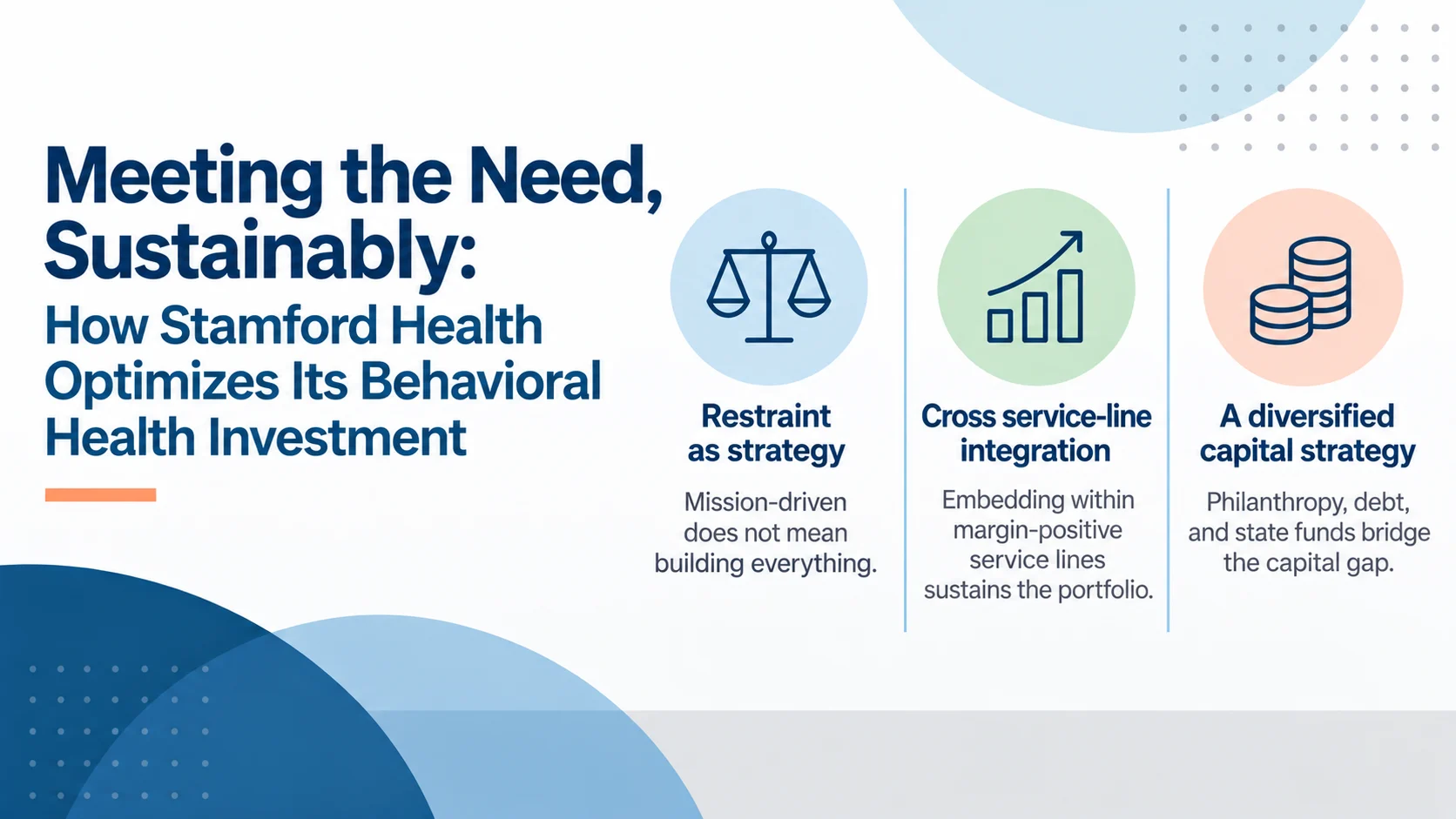
Across Strategy Catalyst's research, health system leaders highlighted the importance of behavioral health to community commitments, though approaches to the question of financial sustainability varied widely. Stamford Health's four-phase planning process produced a deliberate strategy to strengthen its behavioral health continuum through expanded inpatient services, new outpatient offerings, and integrated behavioral health care, while avoiding investments in services that could not be delivered sustainably and at a high standard of care.
Case Study Snapshot
Footprint: Stamford Health is an independent non-profit health system located in lower Fairfield County, Connecticut. It is anchored by 305-bed Stamford Hospital and has over 40 Stamford Health Medical Group locations across its service area.
Challenge: Stamford Health’s last three Community Health Needs Assessments (CHNAs) conducted in 2019, 2022, and 2025 named behavioral health as the #1 unmet community need.
Approach: A four-phase, ~16-week service line planning process aligned behavioral health capacity with community need by defining a comprehensive behavioral health strategy that included inpatient expansion, a core set of outpatient services, and integrated behavioral health support across care settings. The process also prioritized long-term operational and financial sustainability, identifying investments that could be staffed and delivered effectively while leveraging philanthropic and governmental funding sources where appropriate.