Strategy Catalyst interviewed 27 strategy leaders across 16 health systems to understand service line rationalization and optimization decisions, resulting in a rationalization framework that strategy leaders can use with their teams to think through difficult tradeoffs. Strategy Catalyst also surveyed 40 health system executives about service line decisions through the 2026 Service Line Portfolio Strategy Survey. Across this research, behavioral health was the service line for which the tension between mission commitments and financial goals was the sharpest.
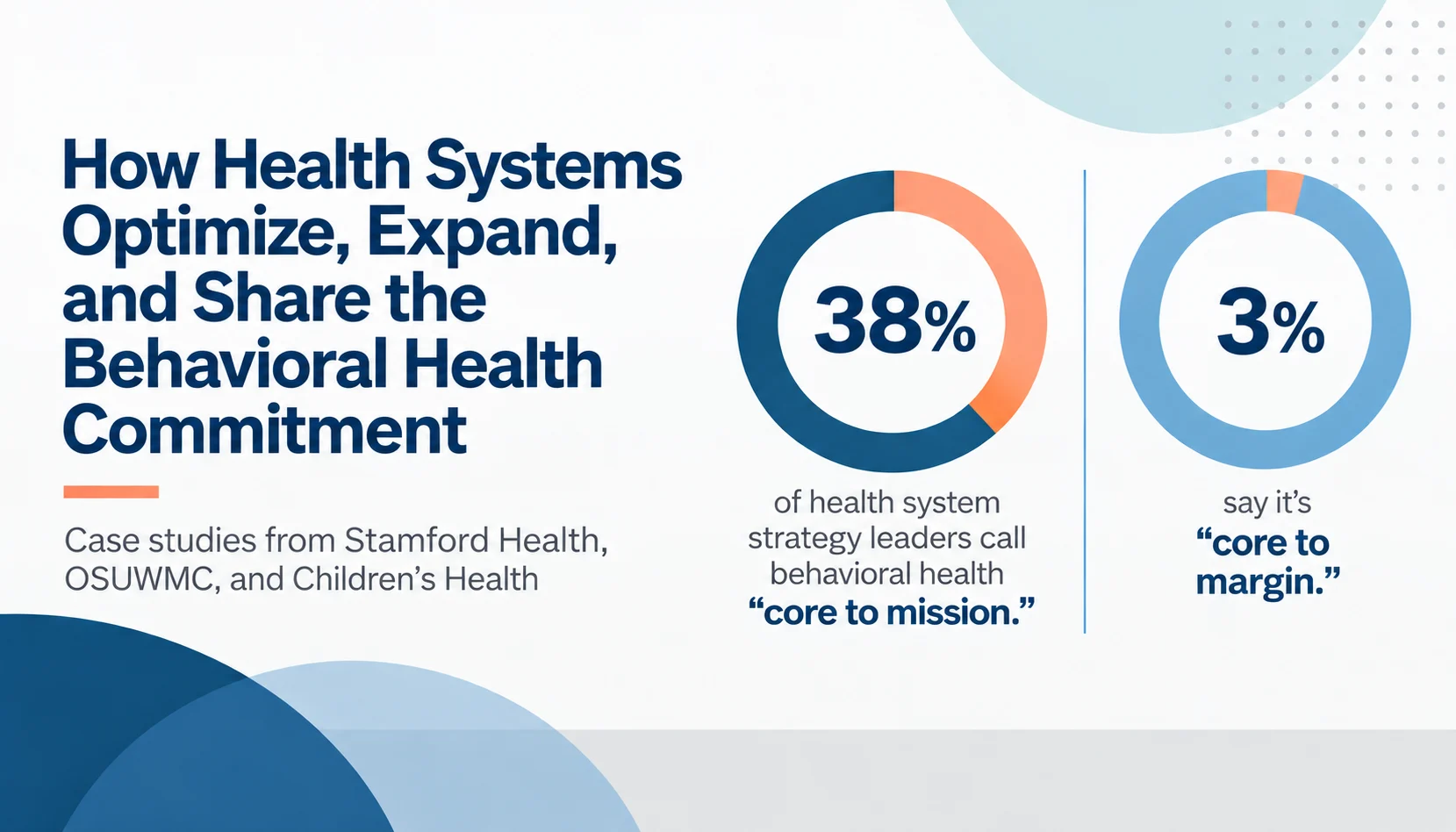
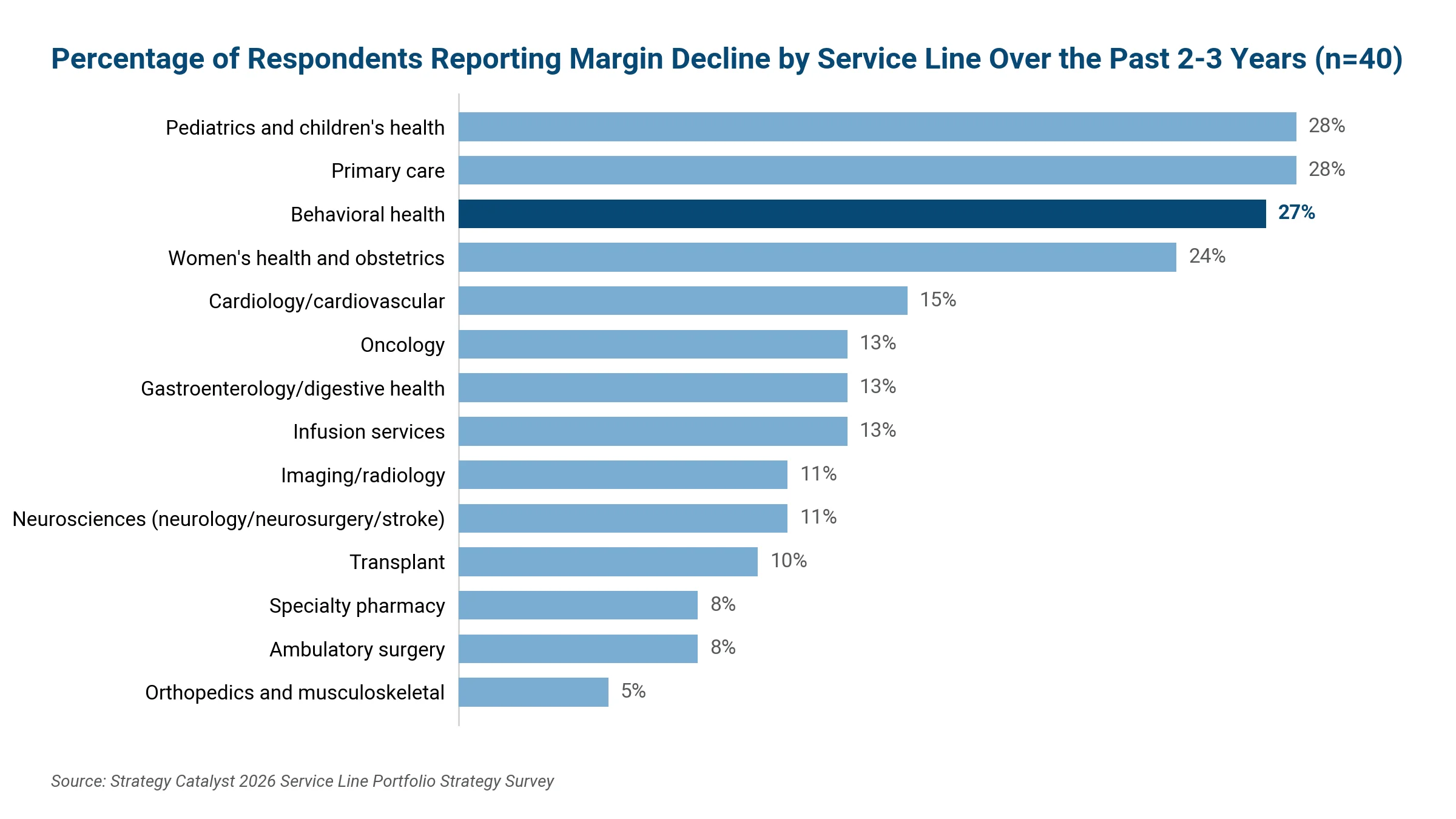
Behavioral health carries one of the widest gaps between mission and margin in the portfolio: 38% of survey respondents call it ‘core to mission,’ and only 3% ‘core to margin.’ Over a quarter of respondents indicated that behavioral health margins have declined over the past 2-3 years, a higher share than most other service lines, as highlighted in the chart below.
Behavioral health demand often exceeds capacity, but relatively low payment means that the service line often faces margin pressure. For most systems, behavioral health must operate from a different playbook. The profiles that follow demonstrate diverse responses to the behavioral health challenge from three systems that differ in scale, structure, and market.
Case Studies
Meeting the Need, Sustainably: How Stamford Health Optimizes Its Behavioral Health Investment. A four-phase planning process sized behavioral health to community need in the most financially sustainable way, with a core set of outpatient services, inpatient expansion, and integrated behavioral health support across care settings.
Whole-Person Care by Design: How Ohio State University Wexner Medical Center Expands Behavioral Health. The academic system is building capacity across levels of acuity, from collaborative care with other service lines to a behavioral health urgent care program which lifted one-week post-discharge follow-up from roughly 43% to 70%.
Beyond Our Walls: How Children's Health Extends Behavioral Health Access Without Owning It. The system meets inpatient demand through partnership rather than ownership, funding 92 pediatric beds in a new state hospital it neither staffs nor holds a stake in, while growing its own outpatient and primary care capacity.